Road Safety Starts with Us: Keeping Our Children Safe

Over the last 18 years, having worked as an early childhood teacher and been a centre director, I have realised that among the most important lessons we give children are those which arise from ordinary experiences, and road safety is one of these essential life skills.
Since educators have a duty to assist children in learning how to look after their own safety, it must be remembered that young children are still developing the capacity to assess speed, distance and danger. That is the reason why road safety education should start in the early years and be supported by continuous guidance from the adults who are closely associated with them.
Since my family background is Indian, I was brought up with a strong sense of family and community; it was always thought that looking after children should be a shared responsibility. This belief has remained with me over the 18 years that I have worked in early childhood, and I really do think that when it comes to children’s safety, everyone has a part to play.

Children learn by watching us
Young children pick up a great deal by just observing. They watch the things that we do, listen to the things that we say and often imitate our behaviour.
We can ask children to stop, look and listen before crossing the road, but they learn just as much when they see us carrying out this behaviour. If we hold their hands, put our phones away, stop at a crossing and patiently wait until it is safe, then we are setting an example of safe behaviour.
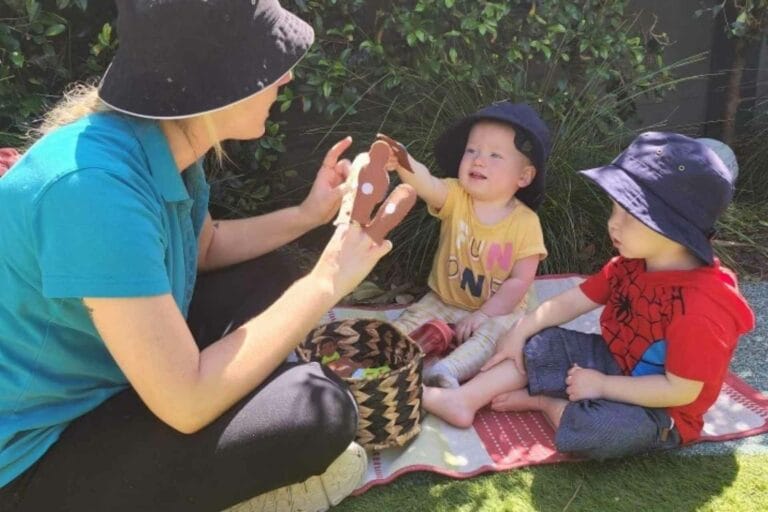
Road safety is an integral part of daily learning in our Sydney Early Education Centres (SEEC). By using stories, having conversations, engaging in role play, incorporating music, offering outdoor activities and organising supervised walks, educators are able to help children start to understand road signs, pedestrian safety, the need to stop and wait, and the importance of staying close to a trusted adult.
Every year, SEEC invites road safety professionals to visit our early education centres and talk with children in a way that is both age-appropriate and engaging. SEEC also provides educators and families with opportunities to attend road safety information sessions. As part of SEEC’s commitment to supporting families, we organise child restraint checks in the community, giving families the opportunity to have their children’s car seats checked and receive practical advice on safe travel.
This method shows the way in which young children learn most effectively – through building relationships, playing, repeating things and having significant experiences.
Keeping our early education centres’ car park safe
The times for dropping off and picking up children can be quite busy. Since families usually have to juggle work, their children, their siblings, and a number of other duties, we realise this. But whenever children are near vehicles, we must take it easy and give them our full attention.
SEEC asks families and visitors to:
- Take your child’s hand as you walk through the car park.
- Do not let the children go ahead and instead keep them close.
- Be especially careful when reversing or moving your vehicle.
- Adhere to the early education centre’s parking and traffic regulations.
- Keep mobile phones out when you are looking after children.
- It would be wrong to assume that a driver has seen you or your child.
- It should never happen that children play near parked or moving vehicles.
Driveways and car parks are especially hazardous for young children since it is difficult for drivers to see them.
According to resources from Kidsafe Australia, supervision and safe practices around vehicles, driveways and roads are important.
Families and educators working together
Road safety is most effective in the case where children get the same messages at home and at the early education centre.
Parents can talk to their children about the things that they notice when walking around the community, help them to develop good habits when crossing the road, and use each trip as a chance to learn.
In our Sydney Early Education Centres, educators promote this kind of learning by providing purposeful instruction and engaging in play-based activities. For example, they build roads out of blocks, make traffic signs, use bikes and scooters to practise stopping, or pretend to be both pedestrians and drivers.
They enable children to become more aware of their surroundings and at the same time make learning a positive and engaging experience.
A message from me
Having been in early childhood education for 18 years, I can say that our role is not merely to look after children while their families are at work; we are actually helping them to acquire the skills and understanding which will assist them for the rest of their lives.
Road safety is one of the lessons.
Since we are parents, teachers, drivers and members of the community, let us set an example by slowing down near our early education centre, taking the small children’s hands, remaining alert and giving them the time and attention they deserve.
Our children are keeping a close eye on us, and each safe decision that we make today contributes to the development of safer habits in the future.
Road safety is something that begins with us.
Helpful resources to expand your road safety knowledge
For families and educators wanting to learn more, Kidsafe Australia provides practical resources on car and road safety, child restraints, driveway safety and pedestrian safety.
The National Child Restraint Guidelines, developed by Kidsafe Australia and Neuroscience Research Australia (NeuRA), provide evidence-informed guidance on keeping children safe when travelling in vehicles.
The Australian Government’s Department of Education also provides information and resources supporting children’s safety and wellbeing within early childhood education and care.
References
- Kidsafe Australia. (n.d.). Car and road safety.
- Kidsafe Australia & Neuroscience Research Australia. (n.d.). National best practice guidelines for the safe restraint of children travelling in motor vehicles.
- Australian Government Department of Education. (2026). A year of action to strengthen child safety in early childhood education and care.

Written By
Sultana Thanawala, WEEC’s Director, Early Childhood Teacher